Vineyards of Sicily: a journey through Italy's most planted region
There is one number that explains Sicily better than any postcard: nearly one hundred thousand hectares of vineyards, more than any other Italian region. Even before it was a land of wine, Sicily was a land of vines—you find them on hills rolling toward the sea, clinging to the terraces of an active volcano, or hidden in hollows carved into the black earth of an island in the middle of the Strait of Sicily.
We cultivate a small piece of this, in the Valso and San Nicola districts above Alcamo. But the Sicilian wine landscape is a mosaic worth exploring in its entirety: here are the island's vineyards, world by world, and how to visit them.
An island shaped by the vine
In Sicily, the vine is not just a crop: it is a layering of civilizations. The Phoenicians traded it, the Greeks brought the bush-trained vine and short pruning, the Arabs brought Zibibbo, and every era has left a piece of the current landscape. Today, that mosaic stretches from sea level to over a thousand meters in altitude—an altitudinal range that almost no other wine region in the world can boast.
It is this variety that produces a small record: the Sicilian harvest is among the longest in Europe. It begins in late July with early-ripening grapes on the western coast and ends in November with high-altitude Nerello Mascalese on Mount Etna: more than one hundred days of harvesting, an entire season that crosses the island like a slow wave.
The landscapes of Sicilian vineyards
The western hills: the sea of vines
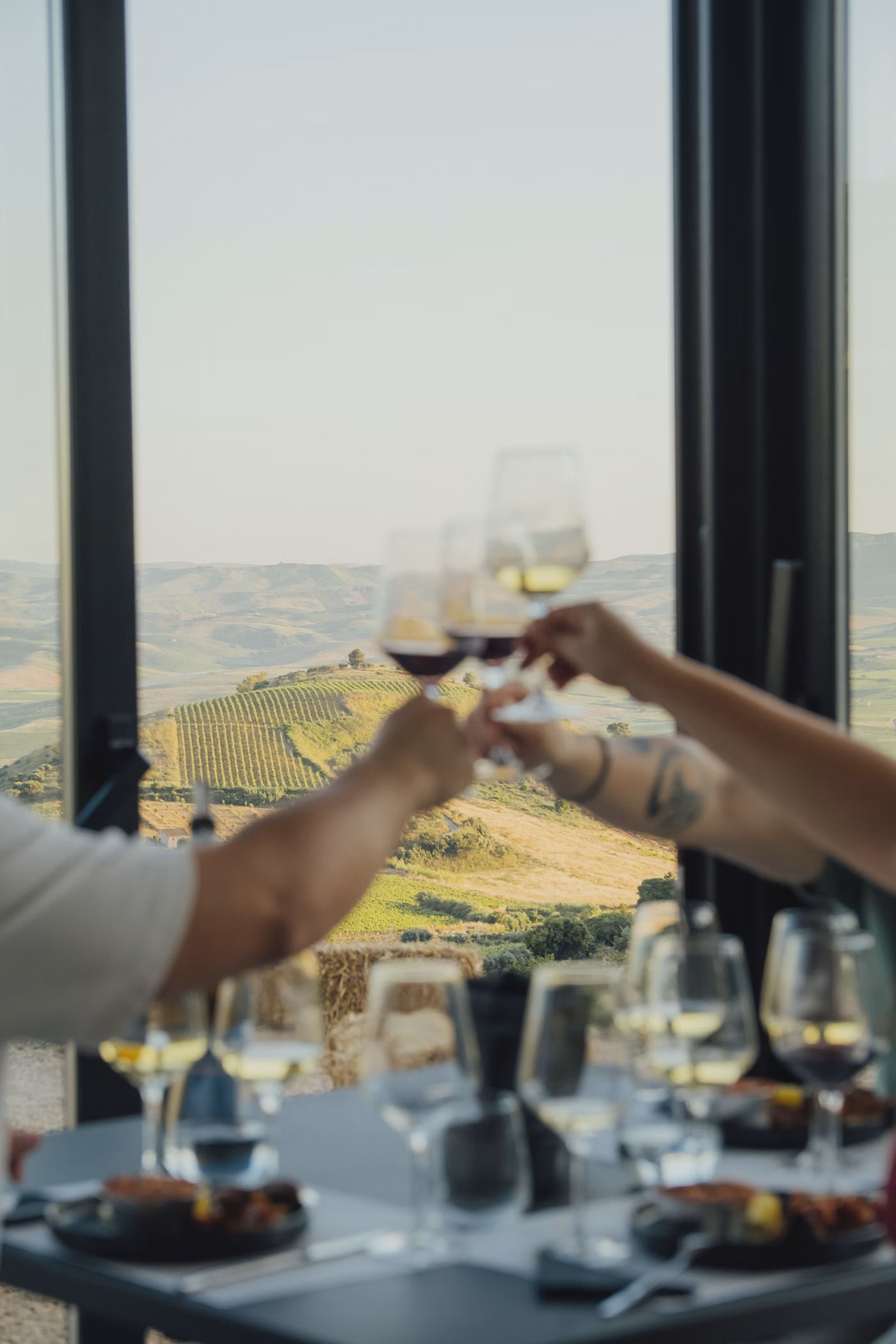
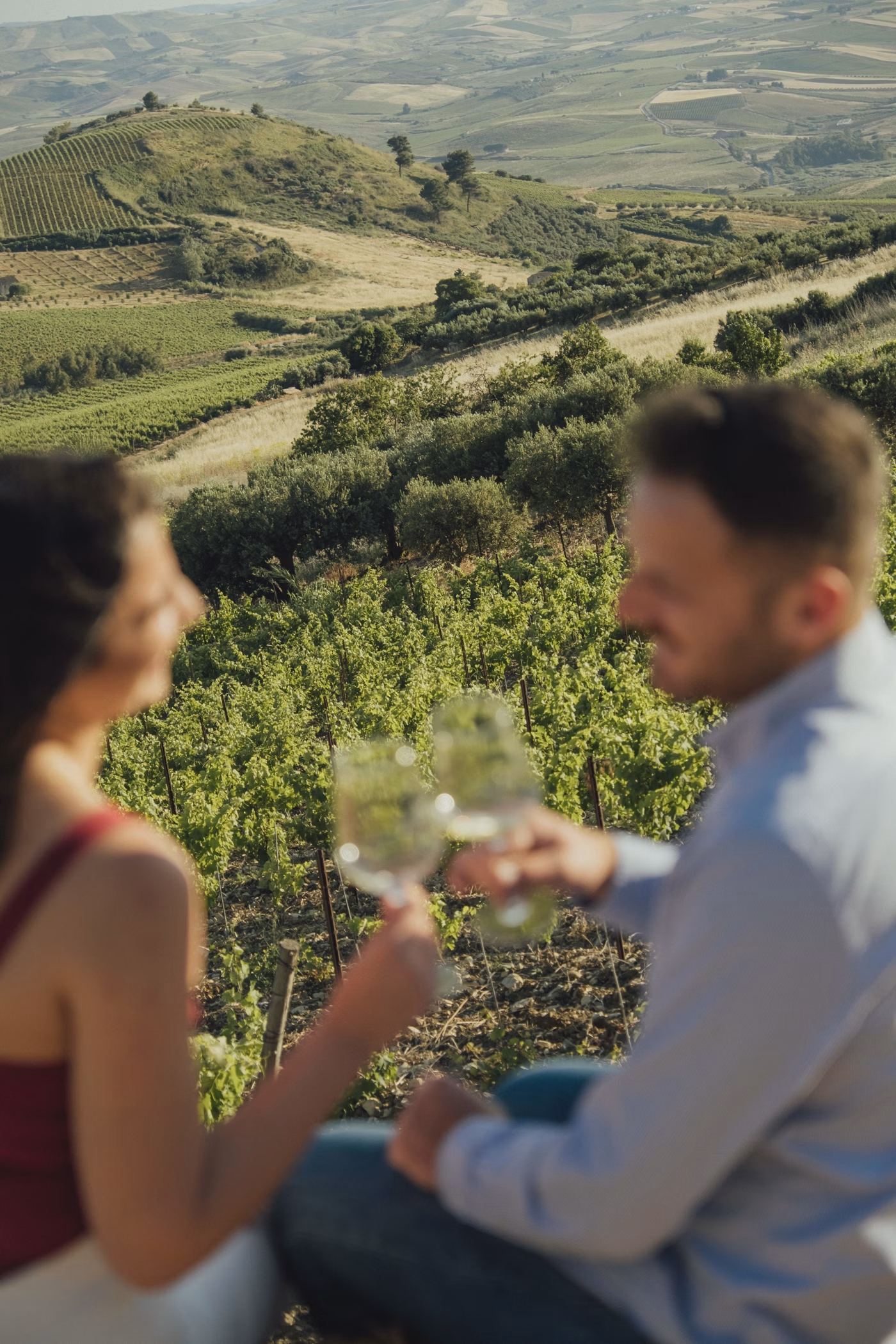
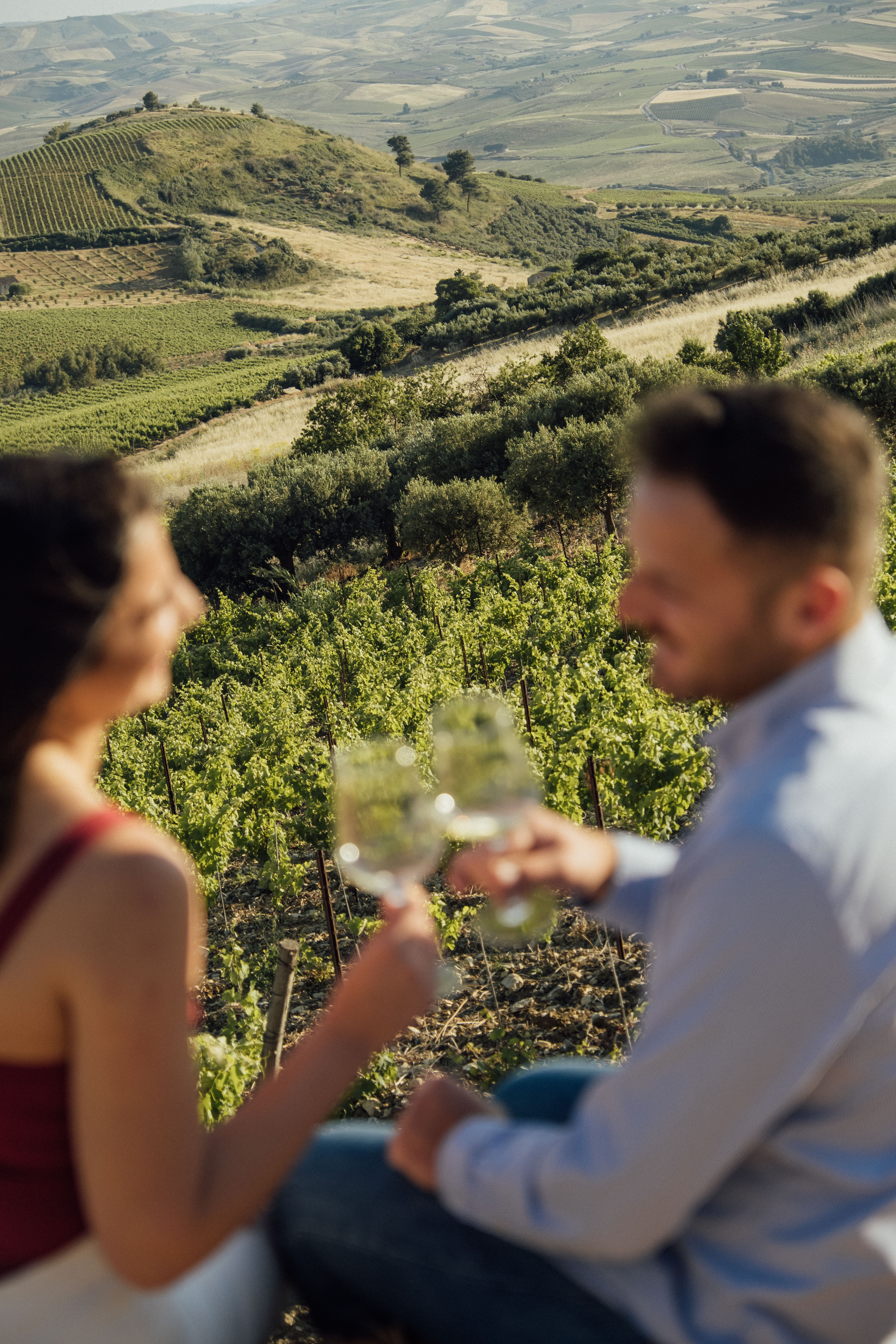
The quantitative heart of the Sicilian vineyard lies in the west, in the most vine-covered province in Italy: an uninterrupted ocean of rows covering the hills between Alcamo, the Belice valley, Salemi, and Marsala, undulating from 200 to 400 meters toward the Gulf of Castellammare. It is the realm of white wines— Catarratto and Grillo above all —grown on limestone and clay soils, beaten by a constant wind that yields healthy, fragrant grapes. This is our home landscape: rows that turn to gold at sunset, with Segesta on one side and the sea on the other.
Mount Etna: vineyards reaching for the sky
On the northern slope of the volcano, the vineyard changes its grammar entirely: terraces carved from lava, dry-stone walls of black rock, and old bush-trained vines climbing to over a thousand meters. It is heroic viticulture by definition—steep slopes, everything done by hand, tiny yields—organized into districts that function like the crus of Burgundy. Here, Nerello Mascalese and Carricante produce mountain wines that have rewritten the island's reputation.
Pantelleria: the bush-trained vine as a World Heritage site
On the island of the wind, Zibibbo grows inside hollows dug into the volcanic soil, pruned low as a bush so the wind won't break it. An agricultural practice so unique and ancient that in 2014, UNESCO inscribed it as an Intangible Cultural Heritage—the first agricultural practice in the world to receive this recognition. Walking through the vineyards of Pantelleria, among dry-stone walls and capers, is the most moving lesson on what it means to cultivate against all logic, out of pure loyalty to a place.
The sands of the southeast
Between Vittoria and the Val di Noto, the vineyards stretch across red sands and limestone soils just a stone's throw from the sea. This is the land of Frappato and Cerasuolo di Vittoria—the only Sicilian DOCG—as well as Nero d'Avola in its historic cradle: low-trained vines, blinding light, and wines defined by fruit and freshness that surprise those expecting only power. Further east, the Aeolian Islands add the final heroic touch: the Malvasia terraces of Salina and Lipari, suspended over the Tyrrhenian Sea.
How we farm: bush vines, trellises, and a hundred harvests
Two systems coexist in Sicilian vineyards. Thebush vine (alberello) is the ancient method: low, free-standing vines close to the ground that withstand wind and drought while concentrating a small yield of high quality—you'll find them in Pantelleria, on Mount Etna, and in old vineyards across the island. The trellis (controspalliera) is the modern form of orderly rows, designed for precision viticulture. In between lies a quiet transition that has made Sicily Italy's leading region for organic vineyard acreage: the dry, breezy climate is a natural ally for those looking to farm with as little chemistry as possible.
Visiting the vineyards: walking through the wine landscape
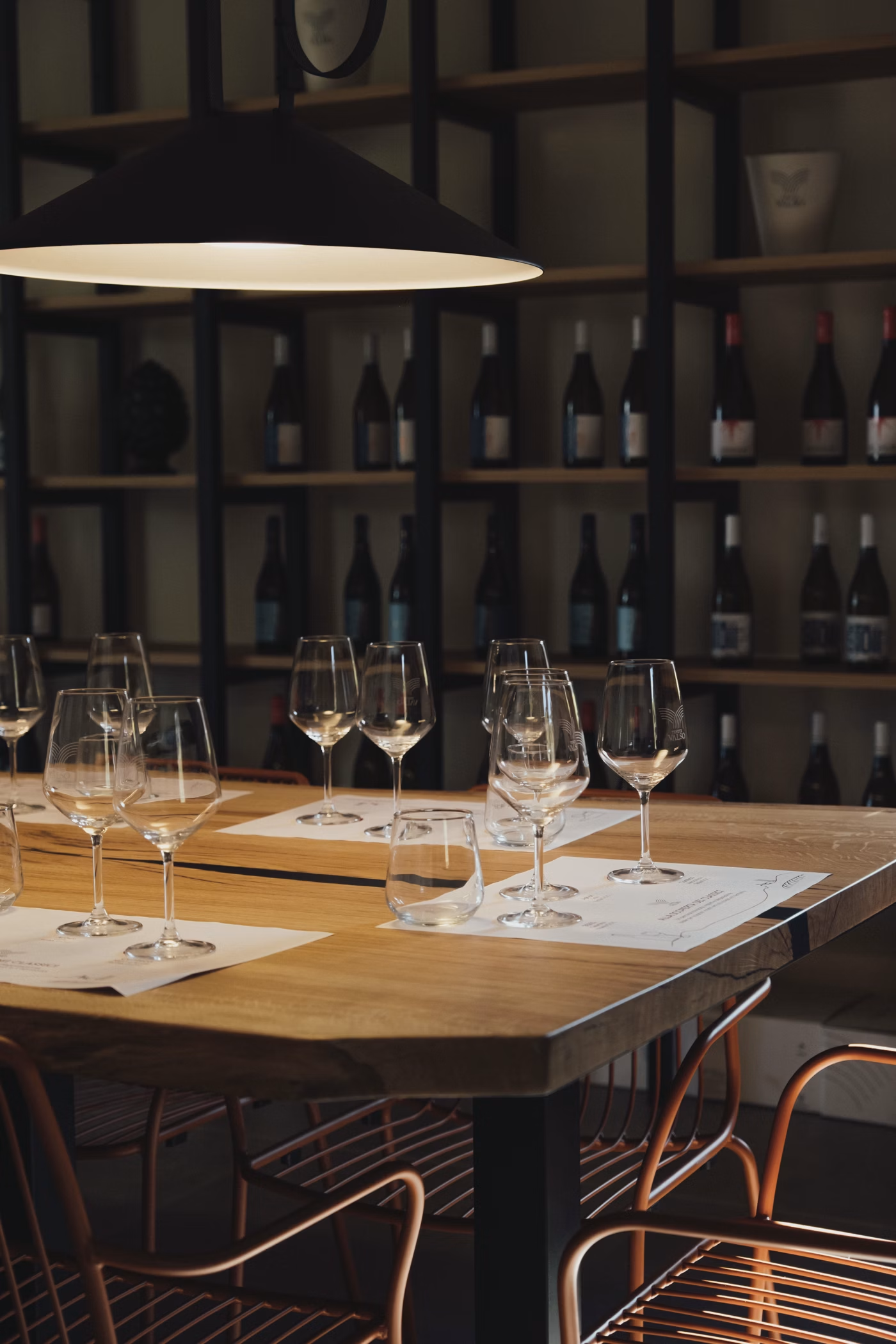
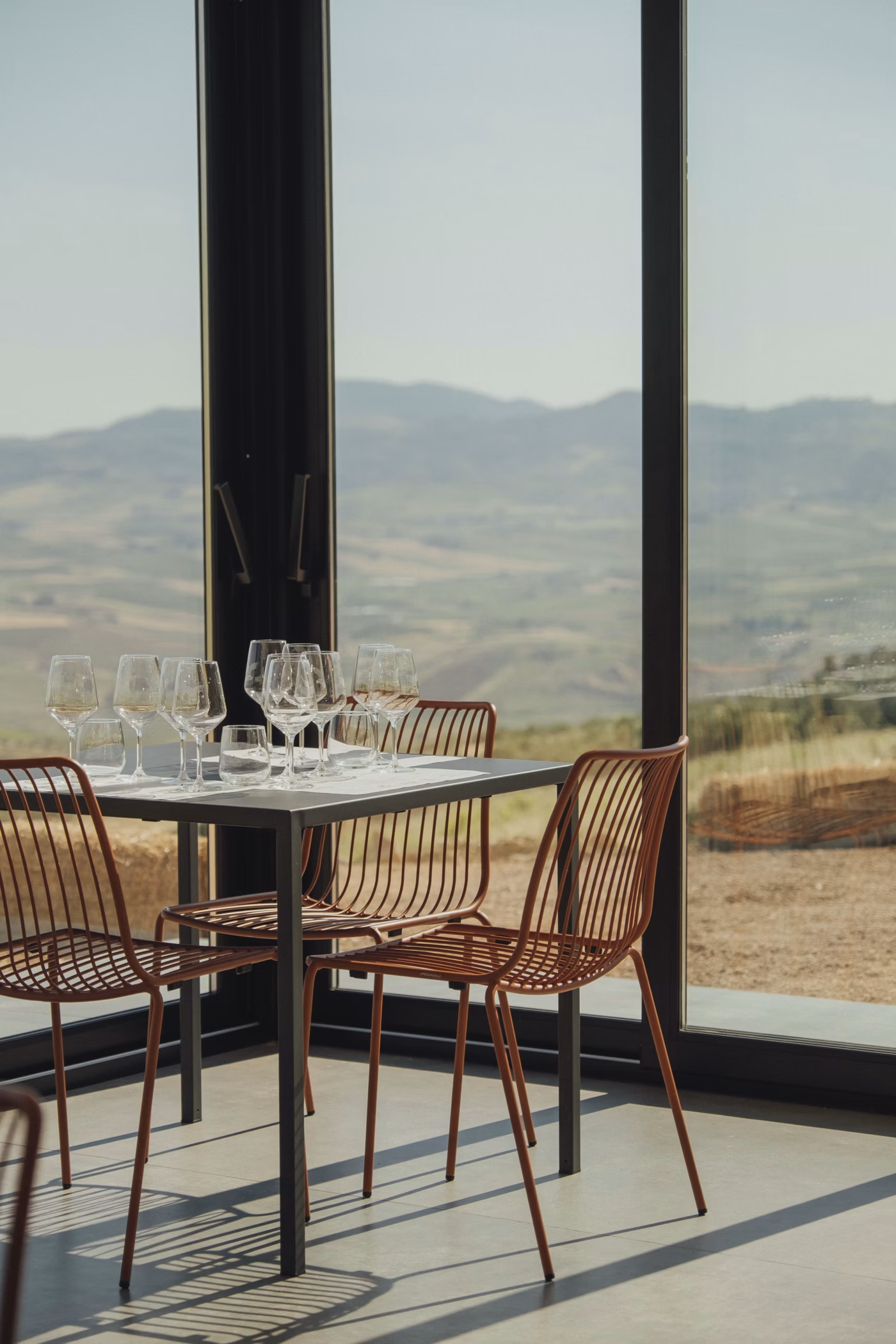
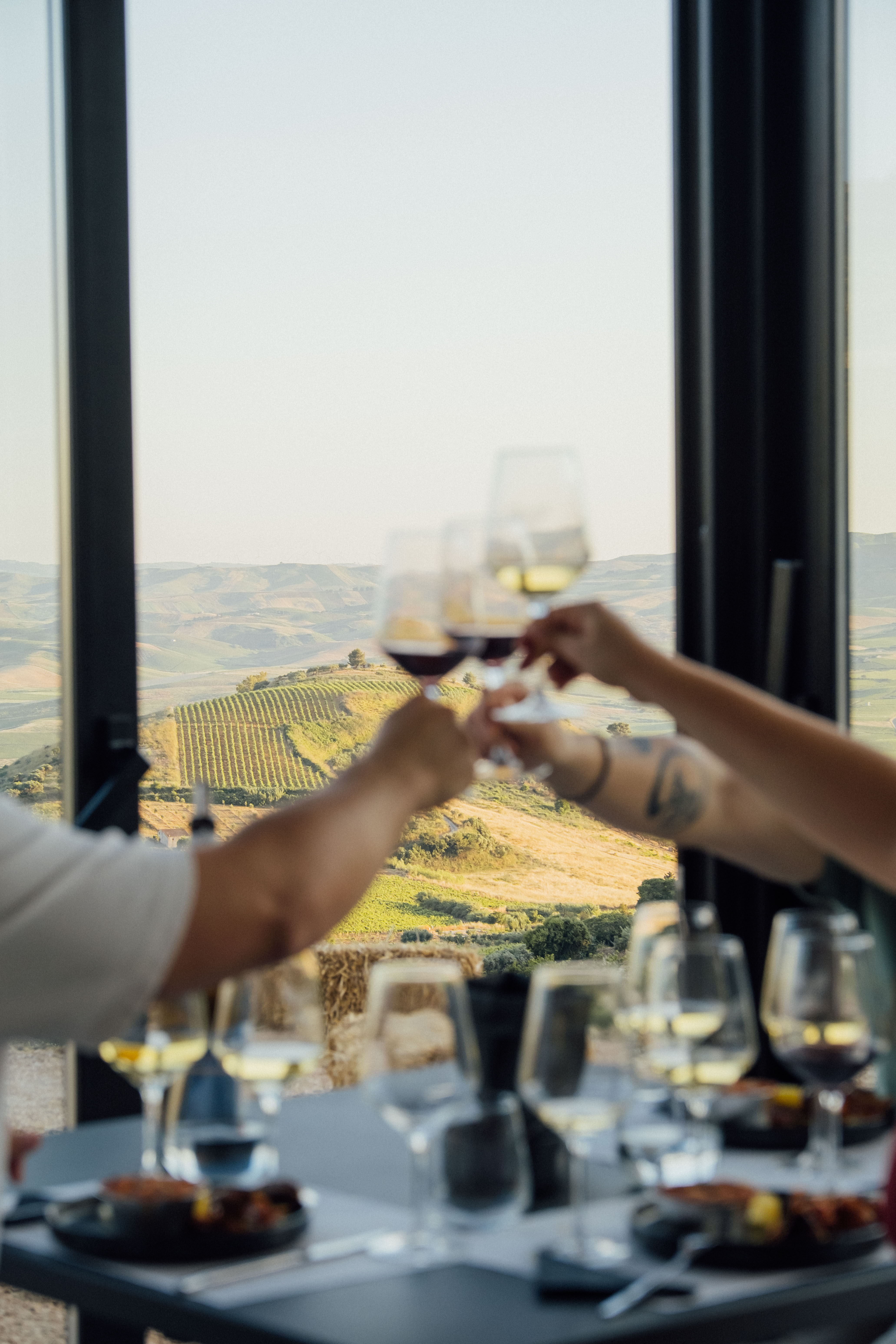
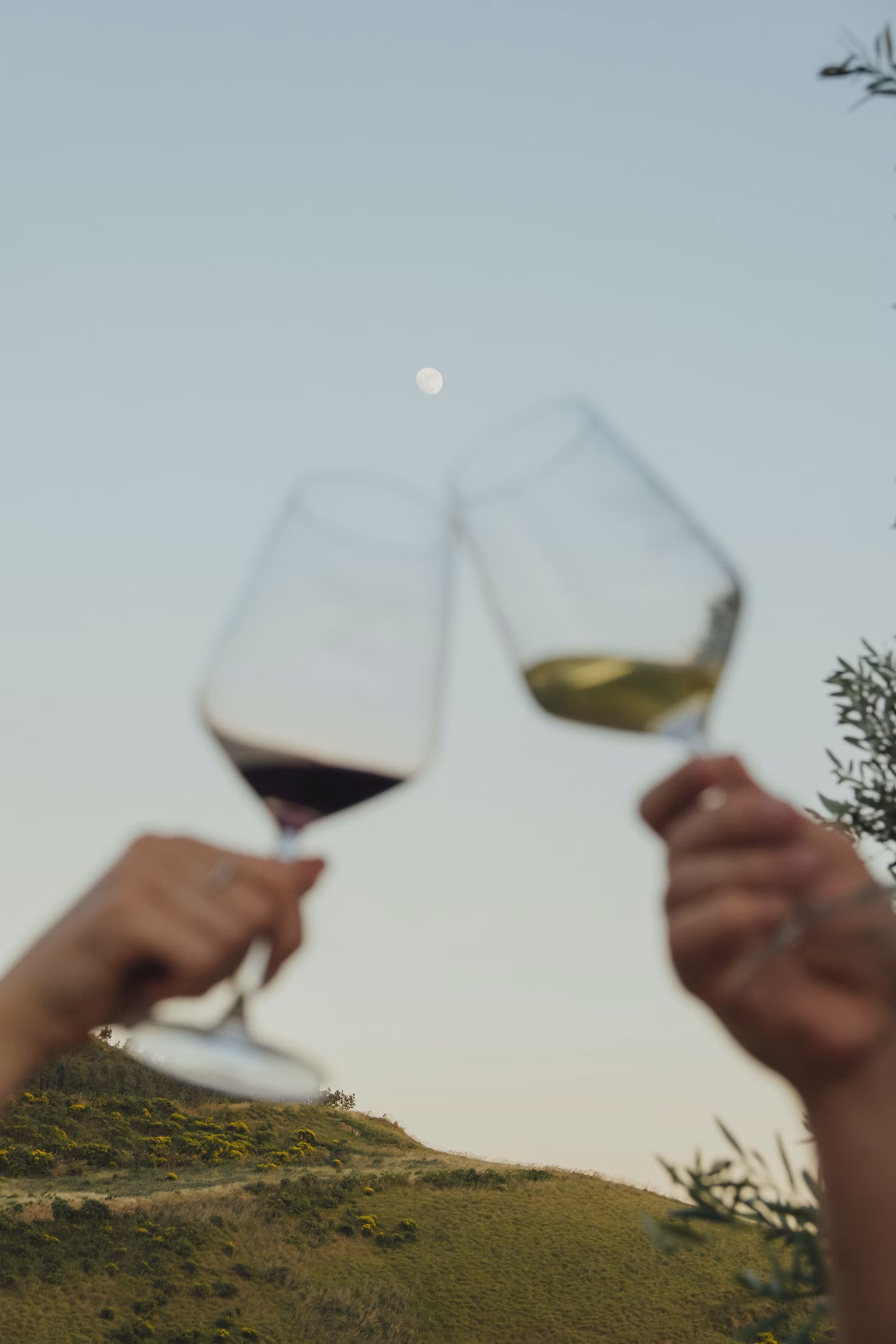
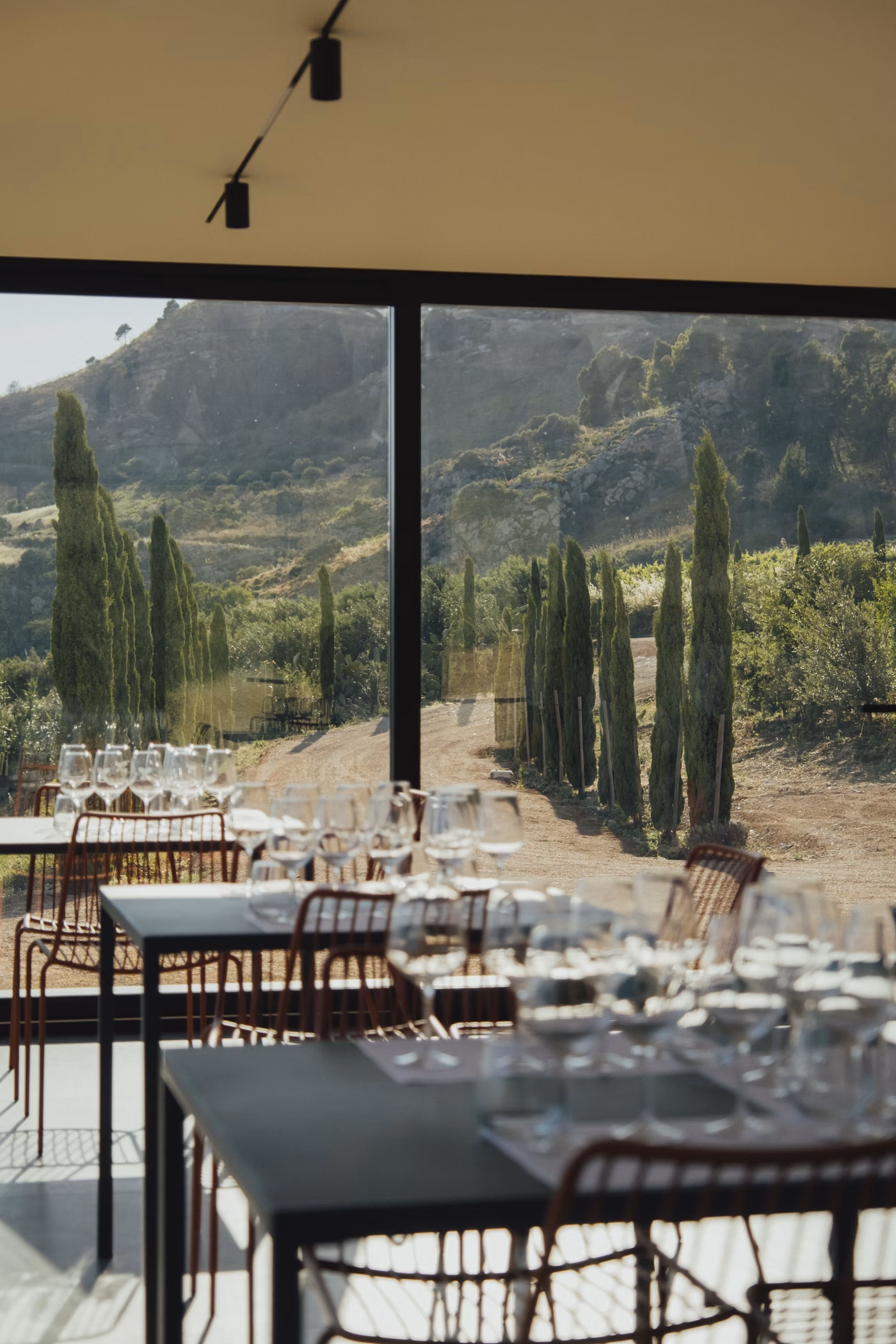
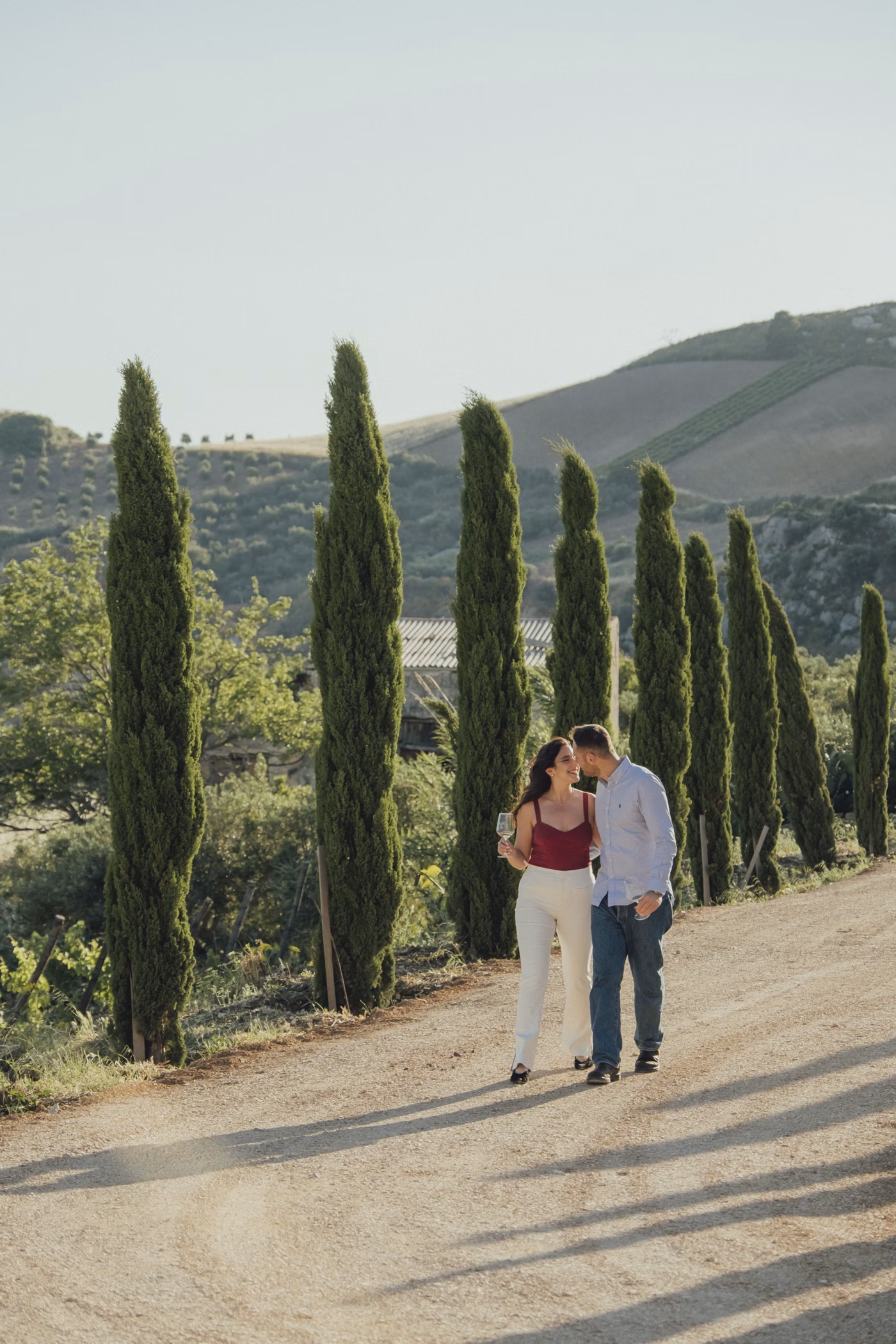
Sicilian vineyards aren't just meant to be viewed from a car window: the island's wine tourism is built on walking right through them. Almost all family-run wineries begin their tours with a stroll through the rows—the moment when wine stops being a product and becomes a place—and during harvest, many offer picking experiences. Our only photography tip: aim for the golden hour, when the low light sets the rows aglow. Otherwise, the usual rules apply: book ahead, visit a maximum of two wineries a day, and if you're planning a full trip, check out our wine tour itineraries ranging from 3 to 7 days and our guide on how a tasting works.
Our vineyards: the Valso and San Nicola districts
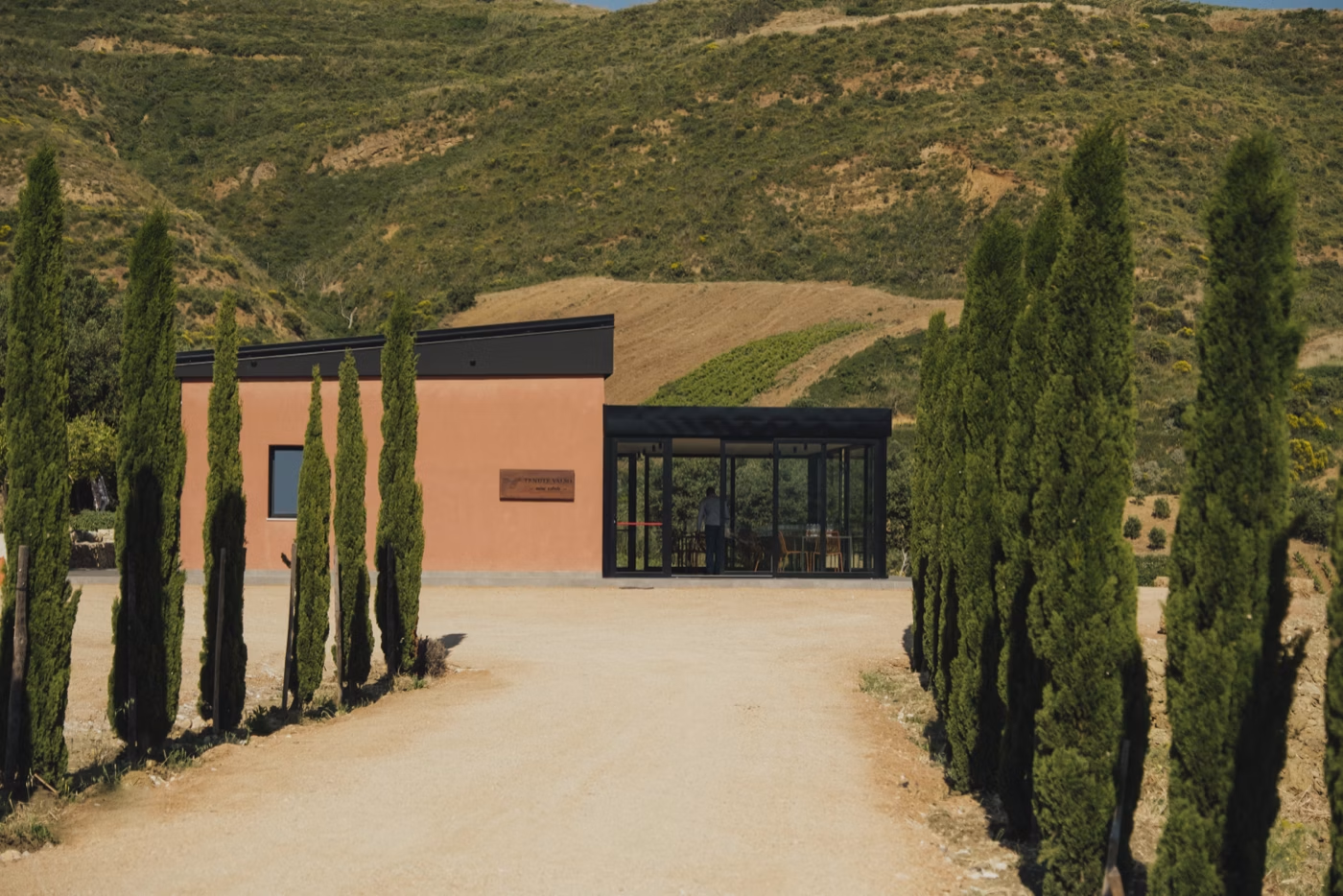
The Tenute Valso vineyards are located on the hills of Alcamo, spread across the Valso and San Nicola districts: Catarratto and Grillo for the whites, Nero d'Avola for the red, all on breezy slopes overlooking the valley toward the Gulf. Every one of our tastings begins there, among the rows, because we believe wine is understood with your feet before your glass: you can find the history of these districts on our estates page, visits on the dedicated page.
Frequently asked questions about Sicilian vineyards
How many hectares of vineyards are there in Sicily?Almost one hundred thousand: it is the most planted region in Italy, ahead of Veneto and Puglia, and it is also the leader in organic farming area. The province with the most vineyards overall is Trapani.
Which are the most beautiful vineyards to visit in Sicily? It depends on the landscape you are looking for: the volcanic terraces of Mount Etna, the bush-trained vines in the hollows of Pantelleria (a UNESCO World Heritage site), the sea of hillside vineyards in western Sicily, or the Aeolian Malvasia terraces. All can be visited through the wineries, by appointment.
When is the grape harvest in Sicily?From late July to November: it is one of the longest harvests in Europe. It begins with the early-ripening grapes on the west coast and concludes in the autumn with the high-altitude Nerello Mascalese on Mount Etna.
What is bush-trained viticulture?The oldest training method in the Mediterranean: the vine is kept low and free-standing, without support wires, making it resistant to wind and drought. The practice in Pantelleria was the first agricultural technique in the world to be recognized as UNESCO Intangible Cultural Heritage.
The landscape that ends up in the glass
In Sicily, the vineyard is not just the backdrop for the wine: it is the wine, just a moment before. Those who learn to read the landscapes—the black terraces, the hollows in the wind, the sea of hills—will find it all in their glass. And if your journey begins in the west, there is always room for curious feet among the rows of our districts.